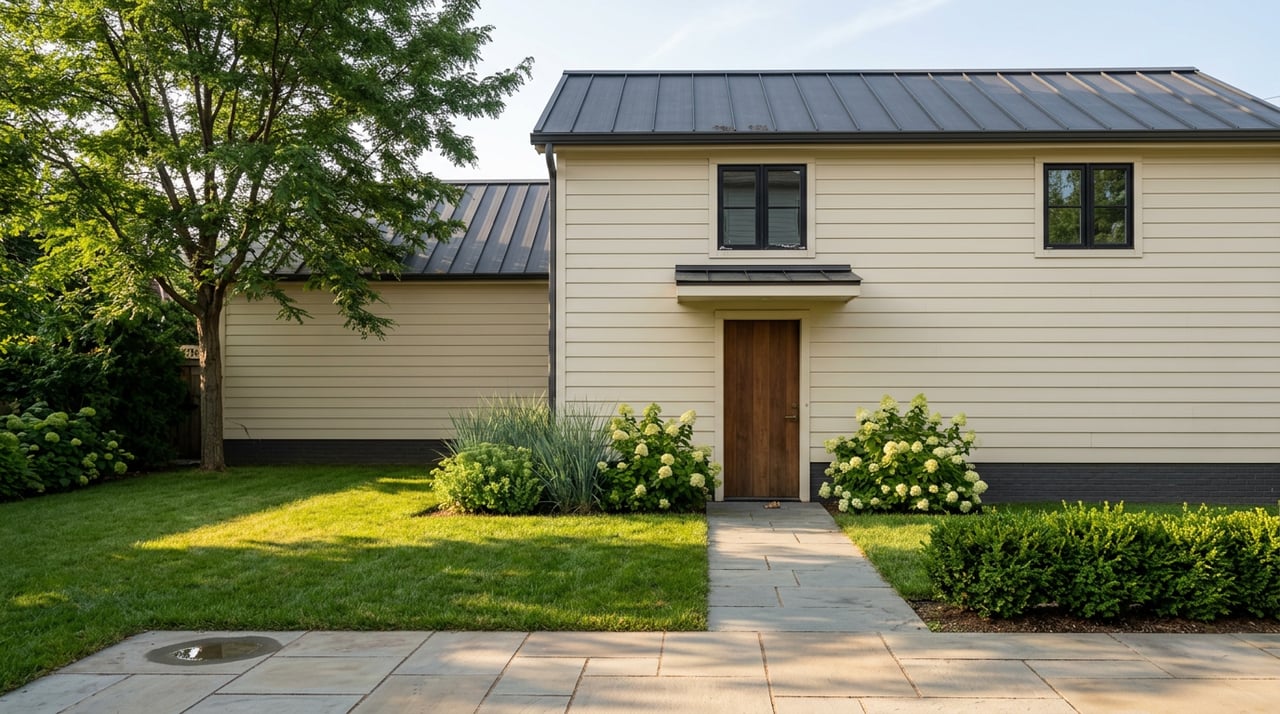
Highlands Denver ADU Value Starts With the Alley Lot
July 23, 2026
July 23, 2026
The list price on a West Highland bungalow reads the same as it did two winters ago. What sits behind the house does not. On December 16, 2024, Denver's CB24-1303 quietly reordered which of those bungalows deserve the number on the sign and which are still catching up to it. The reform did not raise anyone's price. It attached a new option to certain lots and left it off others, and the offers you are seeing on 32nd Avenue this summer are the market working out which is which.
If you are comparing the Highlands to Wash Park, Congress Park, or Sloan's Lake with a portal open and a median in your head, the median is the least useful number on the page. Below is the mechanism that decides the rest.
Denver's citywide zoning text amendment did four things at once. It allowed one accessory dwelling unit in every zone that already allows a single-unit detached dwelling. It eliminated the minimum lot size for a detached ADU. It removed the owner-occupancy requirement for renting either the primary house or the ADU long-term. And it reaffirmed that no additional off-street parking is required for the ADU itself. The reform implements Colorado's HB24-1152 and is codified in part at C.R.S. 29-35-403, which also requires cities to review ADU applications administratively without a public hearing.
The state law went further on one point most buyers miss. It preempts outright HOA bans on ADUs in subject jurisdictions including Denver, under C.R.S. 38-33.3-106.5. HOAs may still enforce reasonable design standards that already apply to the primary residence, but a covenant that simply says "no accessory dwellings" is no longer enforceable inside the city.
Every close-in Denver neighborhood got the same rulebook. The Highlands is where the rulebook meets a bone structure that can actually use it.
Detached carriage-house construction in Denver was banned in 1956 and only partially reopened in 2010. Before that fifty-year gap, roughly 3,500 alley-served carriage houses had already been built across greater Denver, and West Highland and Potter Highlands hold a disproportionate share of them. That is why current listings on Quitman, Caithness, and streets around Highlands Square keep surfacing early-1900s carriage homes, garage ADUs, and duplex-configured Victorians in the same MLS search. The stock predates the ban.
The 2024 reform turned that inherited pattern into a pricing input. To take advantage of it, a Highlands lot needs four things at once:
Lots that check all four are a different product than lots that check two. The listing photos will not tell you which is which.
Denver caps detached ADU size by lot area. The scale matters because it decides whether the rear structure can plausibly be a rental, a family suite, or only a studio.
| Lot size | Max detached ADU |
|---|---|
| Under 6,000 sf | 650 sf |
| 6,000 to 7,000 sf | 864 sf |
| Over 7,000 sf | 1,000 sf |
An all-in build for a roughly 490 sf detached modular unit in Denver runs $245,000 to $285,000 in 2026, with the broader range on custom builds landing between $236,000 and $310,000. Combined permits and utility tap costs typically fall between $7,000 and $13,000. Inside that number sits the Denver Water ADU System Development Charge, which is $2,055 through June 30, 2026 and steps up to $2,170 on July 1, 2026 for properties inside Denver's service area. A West Highland buyer signing this month is buying a project that will cross the SDC step, not one that will beat it.
Financing paths matter here because most Denver buyers cannot bring a quarter of a million dollars in cash to a rear-yard project on top of their down payment. Moderate-income owners in eligible parts of west Denver can enter the West Denver Single Family Plus ADU Pilot, run by the Denver Housing Authority with Habitat for Humanity of Metro Denver, which offers pre-approved plans and financing help in exchange for affordable rental commitments. The state's next Colorado ADU Grant Program window through the Division of Local Government opens Monday, August 3, 2026 and closes Monday, August 31, 2026.
The zoning contest is over. The construction friction is not.
Permit throughput at Denver Community Planning and Development targets 180 days for residential permits in 2026. Realistic application-to-issued time on an ADU is running four to seven months, and the backlog frequently pushes projects past the target. A buyer who closes in August on a lot with a clean ADU envelope is optimistically breaking ground the following spring.
Two Denver-specific constraints keep tripping up otherwise viable lots. Bulk-plane geometry restricts the buildable volume in the rear yard even when the square footage math would clear. Bulk plane is why so many finished ADUs have slanted roofs; it is also why some deep lots on paper can only actually accept 500 usable square feet in practice. The second constraint is the parking compensation rule for garage conversions. Converting a detached garage that currently serves the primary house triggers a separate requirement to replace that primary parking, which is manageable on lots with alley frontage and side yard, and expensive on lots without it.
Short-term rental is not the workaround it looks like on the pro forma. Denver's STR license still requires the property to be the operator's primary residence, so a rear-yard ADU cannot be a pure-investment nightly rental. Long-term rental of both units to non-owners is now permitted; STR-only underwriting is not.
Consider two identical-looking 1905 bungalows around Highlands Square, both listed near the neighborhood's sub-$1 million median for detached homes. One sits on a 6,200 sf alley-served lot with an existing detached garage set fully in the rear third. The other sits on a 5,400 sf lot with the primary house pushed back into the middle of the parcel and no alley.
The first bungalow is optioned. A buyer can convert the garage on the fastest permit path or build up to an 864 sf detached unit under the current rules, and both underwriting paths are live. The second bungalow is not optioned in the same way. A buyer can still add an internal ADU inside the primary structure, which is real value, but the detached-rental math that is driving current Highlands offer strength is off the table.
That gap is not visible in the listing description. It shows up in bidding behavior, in appraiser adjustments, and in the offers that survive inspection.
The lot-level answers decide whether the median list price on this street is describing the property in front of you or a different one.
Do I still need to live on the property to rent out the ADU? No. Denver's owner-occupancy requirement for ADU rental use was removed effective December 16, 2024. Both the primary house and the ADU can be rented long-term to non-owners.
Can I run the ADU as an Airbnb? Not on its own. Denver's short-term rental license still requires the licensed unit to be the host's primary residence, so a rear-yard ADU cannot be a standalone investment STR.
Does the HOA in a Potter Highlands subdivision get to block an ADU? Not through an outright prohibition. State law preempts blanket HOA bans in Denver. Reasonable aesthetic standards that already apply to the primary residence can still be enforced.
How long from offer to occupancy on a new detached build? Plan for four to seven months of permit review, then construction. A realistic first-tenant date is roughly twelve to eighteen months after closing on the property.
The Highlands has always rewarded buyers who read the lot before they read the listing. This is the first year the lot has been legible in this specific way, and the pattern will keep tightening as pre-approved plans, financing products, and permit throughput catch up to the reform. If you are weighing an offer in West Highland or Potter Highlands this summer and want a second read on what a specific parcel can actually accept, Christine Nicholson is happy to walk the lot with you. Let's connect.
Stay up to date on the latest real estate trends.

Get assistance in determining current property value, crafting a competitive offer, writing and negotiating a contract, and much more. Contact Christine today.