Washington Park Buyers Are Waiving Everything Except This
August 13, 2026
August 13, 2026
A buyer under contract on a bungalow near South Franklin Street this spring did what nearly everyone does in Wash Park right now. She waived the appraisal gap protection. She shortened the inspection window to five days. She offered a rent-back so the sellers could take their time moving out. Her agent told her the file needed to look clean, because clean is what wins in this neighborhood. The one thing she refused to cut was the sewer scope. Three days later, the video came back showing a belly in the original clay tile line, forty feet out from the house, sitting under what would eventually be her new driveway.
She didn't lose the house. She used the footage to negotiate a repair credit before closing, and the deal closed on schedule. That outcome only happened because she treated the sewer scope as non-negotiable while treating almost everything else as a bargaining chip. In a market where the advice is nearly always "strip the contingencies to win," Wash Park has one system that deserves the opposite treatment.
A clean offer wins the house. A blind sewer line loses you the year after you move in.
Washington Park earns its reputation for a reason. A March 2026 snapshot of sold homes in the neighborhood showed a 98 percent sale-to-list ratio, a median of 15 days on market, and roughly 21 percent of homes closing above list price. The Denver Metro Association of Realtors reported less than three months of inventory in the citywide $1 million to $2 million price tier as of April 2026, a level that puts sellers firmly in control of terms. Typical single-family homes in Wash Park run $1.1 million to $1.4 million, with perimeter-street properties on blocks like East Virginia Avenue and South Humboldt Street routinely reaching $1.6 million to $2.5 million or more.
Against numbers like that, the standard playbook makes sense. Fewer contingencies. Flexible possession. A fully underwritten pre-approval instead of a basic pre-qualification letter. Every one of those moves reduces a seller's risk without necessarily costing the buyer money, and in a neighborhood this competitive, certainty is often worth more to a seller than a few extra thousand dollars on the price line.
But a separate snapshot from that same season told a slightly different story. A listing-market view of Wash Park in April 2026 showed homes sitting an average of roughly 50 days, not 15. That gap isn't a contradiction. One number describes homes that already sold, filtered down to the properties that moved fastest. The other describes everything currently active, including homes still working through negotiation. Read together, the two numbers say something useful: this market rewards speed and certainty on the well-prepared listings, and it punishes anything that surfaces friction mid-contract. A sewer line is exactly the kind of friction that can turn a 15-day close into a 50-day slog, or worse.
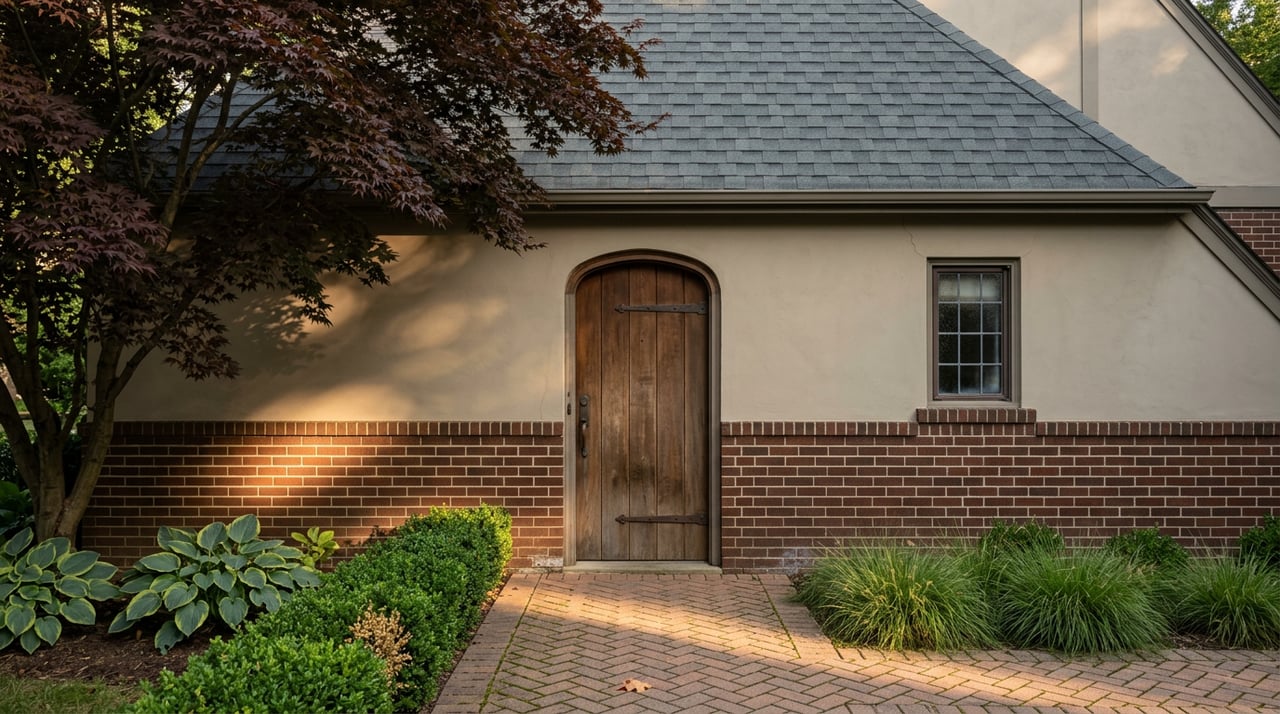
Wash Park's housing stock is what makes the sewer scope different from the other line items buyers are told to skip. The neighborhood's defining bungalows and Tudors were built mostly in the 1910s through the 1930s, and homes from that era in this part of Denver commonly still carry their original clay tile or cast-iron sewer laterals. Those materials don't fail because of neglect. They fail because Denver's expansive, freeze-thaw soil shifts the ground around them year after year, and because the mature silver maples and cottonwoods that shade Wash Park's streets send roots directly into any hairline crack or loose joint they find.
The city has already had to intervene on this exact problem in this exact neighborhood. Denver's Department of Transportation and Infrastructure completed a sanitary sewer lining project across West Washington Park in 2019, relining aging public mains in the area bounded by Ellsworth Avenue, Ogden Street, East Ohio Avenue, and Sherman Street, work that included mains running through the alleys behind residential lots. That project addressed the public side of the system. It did nothing for the private lateral running from each house to the connection point, which is the section a buyer actually inherits at closing, and it's a reminder that the age issue here isn't hypothetical.
None of this means a given Wash Park home has a bad line. It means the building era makes it likely enough that skipping the camera is a bet, not a shortcut.
Here's the part that catches people off guard after they've already closed. In Denver, the homeowner is responsible for the sewer lateral along its entire length, from the house to the city main, including the section that runs under the sidewalk and under the public street. A crack forty feet from the foundation isn't the city's repair. It's the new owner's.
That detail changes the cost math. A routine sewer scope in the Denver market typically runs $125 to $350, usually added onto a general inspection with minimal extra time. If that scope finds a problem, 2026 replacement pricing for a lateral runs about $150 to $300 per linear foot. Any section of pipe that has to be reached by cutting into public pavement adds another $1,000 to $3,000 in street-cut permits and asphalt restoration on top of the repair itself. Put together, a full lateral repair on an older Wash Park lateral commonly lands in the $8,000 to $15,000 range, and a full replacement on a longer or more damaged line can run higher.
| Item | Typical 2026 cost |
|---|---|
| Sewer scope add-on to inspection | $125–$350 |
| Lateral repair or replacement | $150–$300 per linear foot |
| Street-cut permit and asphalt restoration | $1,000–$3,000 |
| Full lateral repair, older Wash Park home | $8,000–$15,000+ |
Compared against a $1.2 million purchase, that repair range is not the kind of number that should decide a deal on its own. It is exactly the kind of number a buyer should know about before removing contingencies, not after.
Waiving contingencies to compete in Wash Park is a sound strategy. Waiving the sewer scope along with everything else is a different decision, and it doesn't have to be part of the same tradeoff. A few ways both sides handle this well right now:
Does a sewer scope really matter if the home already has a full disclosure packet? A standard seller disclosure covers what the seller knows or has experienced, not what a camera would find. Most sewer defects in older Wash Park homes produce no visible symptoms until they fail, so a disclosure without a scope video is missing the one piece of hard evidence that actually shows pipe condition.
Is it reasonable to ask for a sewer-only contingency in a multiple-offer situation? Yes, and it's increasingly common in this specific market. It costs the seller almost nothing in flexibility compared to a full inspection contingency, and it lets a buyer make a genuinely competitive offer without accepting unlimited risk on one system that's expensive to fix and impossible to see.
Does the age of the home matter more than the neighborhood? Both matter, but in Wash Park they tend to move together. The homes most likely to carry original clay tile or cast-iron laterals are the same bungalows and Tudors that give the neighborhood its character and its price floor, which is exactly why this is a neighborhood-specific issue rather than a generic homebuying tip.
Wash Park rewards buyers and sellers who know exactly which risks are worth taking and which aren't. If you're weighing an offer strategy on a specific block, or trying to figure out what a seller should fix versus disclose before listing, Christine Nicholson has spent decades working this exact market and can help you make that call with real numbers, not guesswork. Let's Connect.
Stay up to date on the latest real estate trends.

Get assistance in determining current property value, crafting a competitive offer, writing and negotiating a contract, and much more. Contact Christine today.