Observatory Park Denver Home Prices: Two Markets, One ZIP Code
July 23, 2026
July 23, 2026
If you have looked at Observatory Park on one of the portals, you have probably seen a headline number in the $1.6M to $1.75M range. In October 2025, the median list price for the neighborhood sat at about $1.64M with a median of roughly $465 per square foot. A more recent thirty-day sold read put the median closer to $1.75M with a year-over-year jump above fifty percent on just four transactions.
Both figures are technically accurate, and neither one describes a house you can actually buy. The Observatory Park median is the arithmetic average of two products that share almost nothing except proximity to the Chamberlin Observatory. Understanding which one your offer is competing for matters more than the median itself.
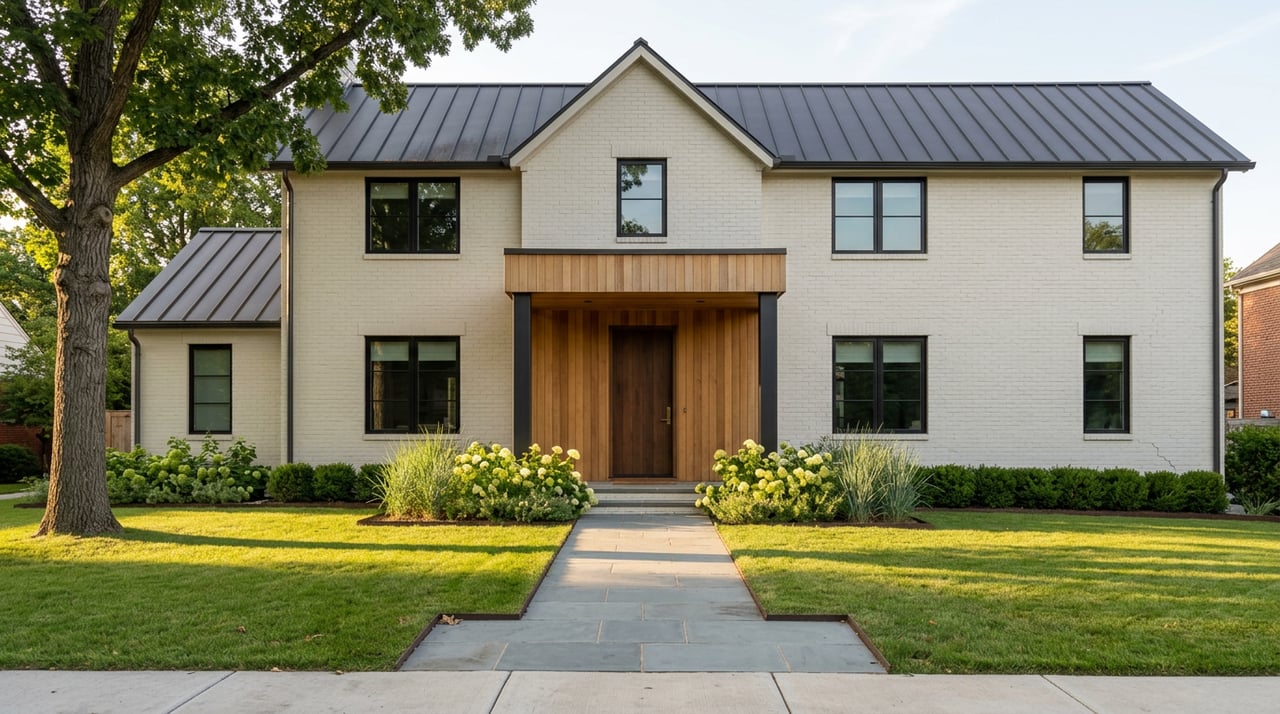
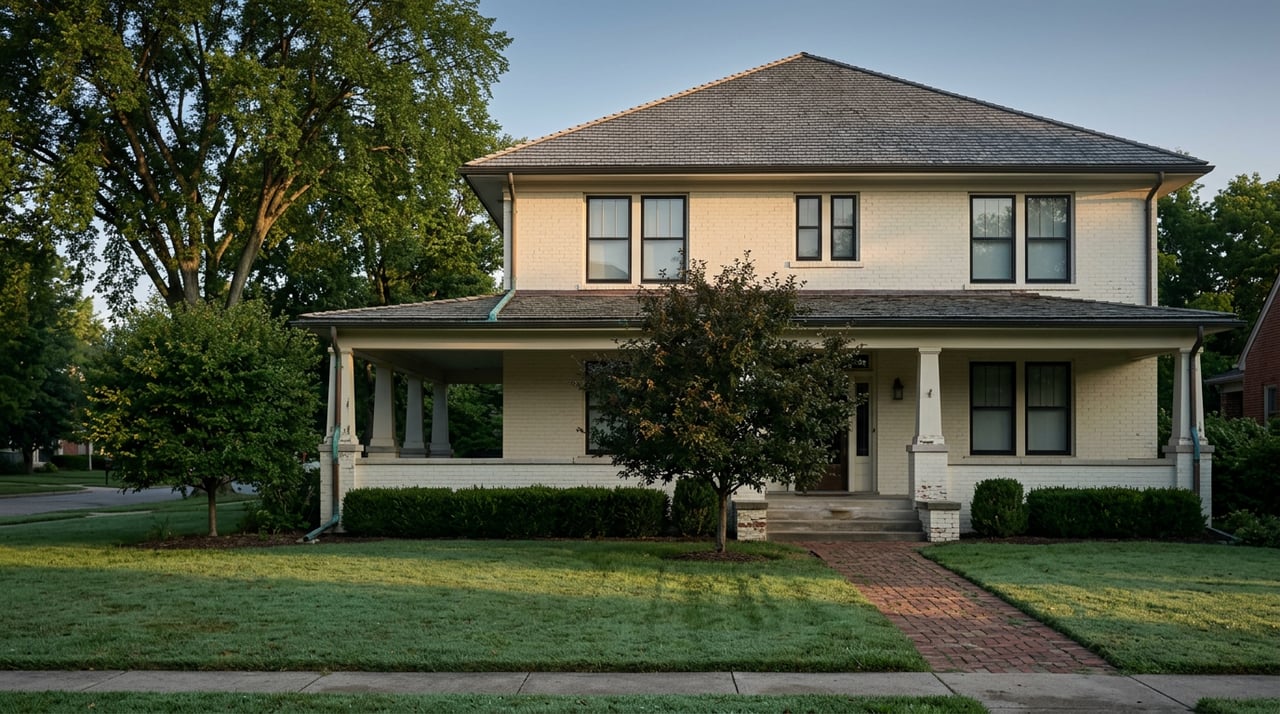
Walk any block between University Boulevard and South Colorado, north of Yale, and you are looking at a housing stock that has been quietly bifurcating for two decades. The original neighborhood was primarily one-story ranches and shotguns from the postwar decades, sprinkled with earlier Craftsman bungalows, Denver Squares, Tudors, and Colonials in the northwest corner. What has arrived since roughly 2015 is a different product entirely: five- and six-thousand-square-foot custom homes on the same lots.
Local builders whose signs you see repeatedly on these blocks include Wiggs Custom Homes, Devex Construction, Wells Construction working with Coesivo Design Group, ATK Construction, and Studio Thomas. Their finished product regularly clears $2.5M and moves past $4M on the larger lots or double parcels.
Here is what the two products actually look like side by side.
| Original ranch / small home | New custom build | |
|---|---|---|
| Vintage | 1940s–1970s, some 1920s bungalows | 2018–2026 |
| Typical size | 1,400–2,400 sq ft | 5,100–8,200+ sq ft |
| Lot | 5,930–7,500 sq ft | Same lots, some doubled to 11,500+ |
| Trade type | Land play, condition sensitive | Finished product, spec or custom |
| Rough price band | $700K–$1.2M | $2.5M–$4M+ |
| Buyer intent | Scrape or heavy remodel | Move-in |
A recent Homes.com listing captures the endgame cleanly: a new-construction home scheduled for August 2026 delivery, sitting on 8,212 square feet of fee-simple land supplemented by 6,736 square feet of adjoining city right-of-way, marketed at the top of the new-build band. That is not the same asset class as the ranch two doors down asking $850K on a 6,000-square-foot lot.
When you combine four to seven sales a month across both products, the median moves wherever the mix happened to fall that month. That is where the "+59.1% year-over-year" reading comes from. It is a composition shift, not appreciation on any individual house.
Buyers who read the median as a single price signal make two predictable mistakes.
The first is paying finished-product money for a land play. The 1950s ranch with a 2005 kitchen refresh is priced against its lot, not its interior. If the comps on your appraisal are new builds because that is what has closed recently on the street, you are underwriting a scrape without knowing it.
The second is the opposite. Buyers who love the trees and the walk to Stella's Coffee or Downpours on Evans sometimes assume the whole neighborhood is priced in the $1M–$1.5M range because that is where the median sits. The mansions along South Fillmore, South Monroe, and Iliff, and the newer custom homes clustered near the park itself, are a different market. They do not soften when the ranches do.
Here is the piece that most buyers do not learn until they are already under contract with a demolition plan penciled in.
Observatory Park sits inside University Park Historic District D-61, a City and County of Denver designated historic district. Denver's Landmark Preservation program requires pre-application review and a Certificate of Appropriateness for exterior work on designated properties, including additions, ADUs, pop-tops, new construction, window and door replacements, and demolition. That review is not a rubber stamp on projects the district's design guidelines were written to discourage.
Even outside a designated district, Denver reviews every total demolition permit for landmark eligibility citywide. If the property has potential landmark significance, the city can post a 21-day notice, and a notice of intent to designate can pause the demolition application while the review runs. Buyers underwriting a spring closing and a summer teardown sometimes discover their timeline needs a quarter added to it.
The other side of that same rule is a real financial upside on the restore path. A contributing building inside a Denver historic district may qualify for Colorado's state historic preservation income tax credit if the work meets the state's rehabilitation standards. That credit changes the arithmetic on a careful renovation, especially compared to a scrape whose review outcome is uncertain.
The single most useful question you can ask before submitting an offer on an older Observatory Park home is whether the structure is classified as contributing or noncontributing within D-61. That status shapes almost everything downstream.
None of this is a reason to avoid the neighborhood. It is a reason to price the friction into your offer, your timeline, and your builder selection. The custom builders working here already know these rules. A general contractor from Highlands Ranch will learn them on your dime.
At roughly $700K–$1.1M, you are buying a lot with a livable but dated house on it, most likely a 1950s ranch or a small bungalow. Restoration is realistic. A scrape penciled through D-61 review is possible but not fast. The best of these are on blocks near the park itself, where the trees and the lots are the durable asset.
At roughly $1.2M–$2M, you are in a mix. Some of these are thoughtfully renovated originals, including expanded ranches like the 2024 family-room addition currently on the market. Others are older custom homes from the first wave of the neighborhood's rebuild cycle, roughly 2004 to 2015, that read as dated to a 2026 buyer but have the square footage.
Above $2.5M, you are almost entirely in new construction or recent gut renovations by the named local builders. The Chamberlin Observatory blocks, South Fillmore, South Monroe, and the double-lot parcels command the top of this band. Inventory has loosened compared to 2021 and 2022, months of supply has widened, and homes above $2M in Denver's luxury tier now regularly sit longer before selling. That does not mean they discount easily. It means the negotiation window has opened for buyers who are patient.
How can the median move fifty percent in one year on a real neighborhood? It cannot, on any individual property. Observatory Park closes only a handful of homes a month. When two or three of those are new builds above $3M and the prior year's month was three ranches under $1M, the median swings. The reported change is a mix effect, not appreciation.
Is the historic district a reason to avoid Observatory Park? No. The district is why the tree canopy and the streetscape still feel like themselves. It does add a review layer to any exterior project, which is worth understanding before you buy a house you intend to change substantially. Buyers who love the neighborhood as it stands are usually thrilled the rules exist.
Where does the University of Denver factor into pricing? The campus is an amenity for owner-occupants who value the Newman Center for the Performing Arts, DU athletics, and the Denver Astronomical Society's public nights at Chamberlin. It is also a rental floor for the small-multifamily inventory along the western edge. For single-family buyers in the core of Observatory Park, DU shows up as a walkability premium more than a rental-market variable.
What is the single question a smart buyer asks first? Ask your agent to pull the last twelve months of closings on the specific block, separated by original-condition and new-construction, and ignore the neighborhood median entirely. Two blocks in Observatory Park can be running different markets, and the block-level read is the one that matters.
If you are weighing Observatory Park against Wash Park East, Hilltop, or Cherry Creek this summer, or trying to decide whether the ranch you have been walking past for a decade is a restore candidate or a lot play, that is a conversation worth having with someone who has watched this neighborhood cycle through both markets. Christine Nicholson works these decisions with the analytical read they deserve. Let's Connect.
Stay up to date on the latest real estate trends.

Get assistance in determining current property value, crafting a competitive offer, writing and negotiating a contract, and much more. Contact Christine today.